
Direct answer: Chamomile (洋甘菊, yánggānjú) is the German chamomile, Matricaria chamomilla (syn. Matricaria recutita), a daisy-family (Asteraceae) annual native to Europe and western Asia. Its flowers carry a soft, sweet, apple-like, hay-like scent, familiar from herbal tea and modern aromatherapy. It is a modern crossover, not a classical Chinese incense ingredient.
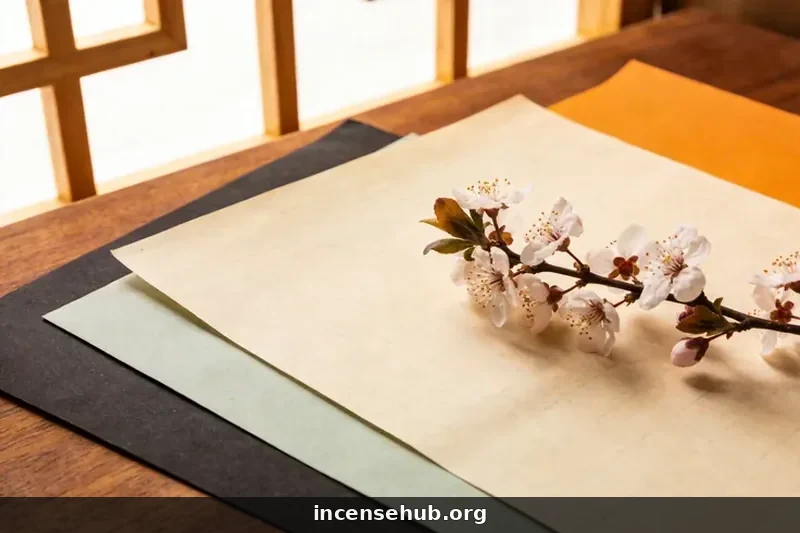
Key facts
| Chinese | 洋甘菊 (yánggānjú); German chamomile |
| Botanical source | Matricaria chamomilla (syn. M. recutita), family Asteraceae — the flowers |
| What it is | A European daisy-family annual |
| Aroma | Sweet, apple-like, floral, hay-like |
| Traditional role | None in classical Chinese incense; modern aromatherapy |
Aroma profile
Direct answer: chamomile (洋甘菊) has a soft, sweet, gently fruity scent with an apple-like, hay-like warmth — the mild, comforting smell of chamomile tea rather than a heady flower. It is quieter and more herbal-warm than rose or jasmine, and reads as a calm, mellow note.
chamomile (洋甘菊) has a soft, sweet, gently fruity scent with an apple-like, hay-like warmth — the mild, comforting smell of chamomile tea rather than a heady flower. It is quieter and more herbal-warm than rose or jasmine, and reads as a calm, mellow note.
The apple note is chamomile’s signature — indeed the name “chamomile” itself descends from Greek “earth-apple” (chamaimēlon), recording that faint apple-like scent. It is a quiet flower: not heady like jasmine, not rosy like rose, but soft and hay-warm, closer to a dried herb than to an opulent bloom.
A provenance note (read this)
Direct answer: chamomile (洋甘菊) is a modern crossover, not a classical Chinese 香材: Matricaria chamomilla is a European and western-Asian species with no native Chinese status. The 洋 (“foreign”) prefix in its name marks it as non-native, and its use is modern aromatherapy and tea.
chamomile (洋甘菊) is a modern crossover, not a classical Chinese 香材:
- Matricaria chamomilla is a European and western-Asian species, not native to China; Flora of China does not record it as native.
- The Chinese name 洋甘菊 (“foreign sweet-chrysanthemum”) marks it as non-native — the “洋” (foreign) prefix distinguishes it from the native chrysanthemum (菊花, Chrysanthemum), which is a classical Chinese flower.
- Chamomile’s use is modern aromatherapy and tea, absent from the classical 香材 canon.
This page records it honestly as a modern aromatherapy flower — no classical Chinese origin is claimed, and none is fabricated.
The “洋” (foreign) prefix (read this)
Direct answer: The 洋 (yáng, “foreign”) prefix in 洋甘菊 is a systematic Chinese botanical convention for marking non-native plants: 洋甘菊 means “foreign sweet-chrysanthemum,” explicitly distinguishing the European chamomile from the native chrysanthemum (菊花). The prefix is the provenance marker.
The name 洋甘菊 (yánggānjú) is a prefixed foreign name, and the prefix is systematic:
- 洋 (yáng) — “foreign / oceanic,” the prefix Chinese botany uses to mark plants of foreign origin.
- 甘菊 (gānjú) — “sweet chrysanthemum,” linking chamomile to the native chrysanthemum family.
So 洋甘菊 means literally “foreign sweet-chrysanthemum” — a name that both borrows the native chrysanthemum’s flower (菊花, a classical Chinese flower) and flags the chamomile as non-native via the 洋 prefix. This is the third foreign-naming pattern in this encyclopedia: descriptive (薰衣草, “clothes-scenting herb”), phonetic (依兰, sound-borrowed), and prefixed (洋甘菊, “foreign X”). The prefix is a clear, honest provenance marker — the plant is foreign, and the name says so.
The chamomile (洋甘菊) / chrysanthemum (菊花) distinction (read this)
Direct answer: chamomile (洋甘菊) and chrysanthemum (菊花) are both daisy-family (Asteraceae) flowers, but 洋甘菊 is the European Matricaria chamomilla, while 菊花 is the native Chrysanthemum, a classical Chinese flower. The 洋 prefix is what separates them.
The two daisy-family flowers share a family and a “chrysanthemum” name, but are different plants:
- chamomile (洋甘菊) — Matricaria chamomilla, the European “foreign sweet-chrysanthemum.” This entry.
- chrysanthemum (菊花) — Chrysanthemum, the native Chinese flower, a classical 香材 and cultural flower. Its own entry.
Both are Asteraceae, hence the shared “chrysanthemum” in chamomile’s Chinese name — but chamomile is European and marked 洋 (foreign), while 菊花 is native and classical. They are different genera, and the prefix is the whole distinction. See chrysanthemum.
Botanical source and origin
Direct answer: Matricaria chamomilla, German chamomile, is an annual herb of the daisy family (Asteraceae), native to Europe and western Asia. The fragrant part is the small, white-and-yellow flower head, dried for tea or distilled for chamomile essential oil; it is distinct from Roman chamomile (Chamaemelum nobile).
Matricaria chamomilla, German chamomile, is an annual herb of the daisy family (Asteraceae), native to Europe and western Asia. The fragrant part is the small, white-and-yellow flower head, dried for tea or distilled for chamomile essential oil. It is distinct from Roman chamomile (Chamaemelum nobile), a different genus with a similar scent. GBIF records Matricaria chamomilla (with M. recutita as a synonym).
The German-vs-Roman distinction is the botanical point: “chamomile” covers two different genera — German chamomile (Matricaria chamomilla, the more common for tea and oil) and Roman chamomile (Chamaemelum nobile, a different plant with a similar apple-like scent). This entry describes the German chamomile.
In modern use
- Herbal tea and aromatherapy: chamomile is a classic herbal tea and a mellow aromatherapy flower.
- Fragrance: chamomile oil lends a soft, apple-like note in some modern blends.
- Not classical Chinese incense: chamomile has no place in the classical 香材 canon; the native chrysanthemum (菊花) is the classical Chinese flower.
Traditional use vs modern evidence
Direct answer: There is no classical Chinese incense record for chamomile (洋甘菊); its position is entirely modern. We make no medical claims. The documented facts are botanical identity, the Asteraceae placement, and its modern aromatherapy role.
There is no classical Chinese incense record for chamomile (洋甘菊); its position is entirely modern. We make no medical claims. The documented facts are botanical identity, the Asteraceae placement, and its modern aromatherapy role.
Why is chamomile used in modern aromatherapy?
Direct answer: Chamomile is used in modern aromatherapy for its soft, mellow, apple-like floral note — a calming, comforting scent strongly associated with tea and relaxation. It is a modern aromatherapy flower, usually a chamomile-oil or dried-flower note, not a classical 香材.
Chamomile’s role in modern aromatherapy is the mellow, calming floral note. Its soft, apple-like, hay-warm scent — the smell of chamomile tea — has made it a classic of relaxation and sleep in modern practice, and it appears in modern candles, diffusers, and incense on that association. In incense it is usually a chamomile-oil or dried-flower note, a modern addition. The honest framing is a soft, mellow floral signal, not a treatment.
How is it processed?
Direct answer: Chamomile’s fragrant material is both the dried flower head (for tea and some incense) and the distilled essential oil (for aromatherapy). The flowers are dried whole; the oil is steam-distilled. The dried flower is the simpler, milder product.
The processing is a flower-drying / oil-distillation split:
- Drying — the flower heads are dried whole, for tea and sachets.
- Distillation — chamomile essential oil is steam-distilled from the flowers for aromatherapy.
- Use — the dried flower for tea and home fragrance, the oil for aromatherapy and fragrance.
The two products — dried flower and essential oil — have different uses; the oil is the concentrated material, the dried flower the milder, simpler form.
What determines quality?
Direct answer: Chamomile quality is a matter of species and condition: German chamomile (Matricaria chamomilla) is the common tea/oil species, distinct from Roman chamomile (Chamaemelum nobile), and a clean, intact, aromatic flower head is the practical signal.
The quality factors:
- Species — German chamomile (Matricaria chamomilla) vs Roman chamomile (Chamaemelum nobile), different genera.
- Condition — clean, intact, aromatic flower heads.
- Character — a soft, sweet, apple-like, hay-like scent.
The species distinction (German vs Roman) is the key botanical point; condition and aroma are the practical signals.
Common forms
Direct answer: Chamomile reaches fragrance as dried flower heads (for tea and sachets) and as steam-distilled essential oil (for aromatherapy). The dried flower is the milder form; the oil is the concentrated material.
| Form | Use |
|---|---|
| Dried flower heads | Tea, sachets, home fragrance |
| Essential oil (steam-distilled) | Aromatherapy, fragrance |
The dried flower is the milder, simpler form; the oil is the concentrated fragrance material. Both are modern uses, not classical 香材 forms.
Safety
Incense combustion produces smoke and particulate matter. Burn in a well-ventilated space, avoid inhaling concentrated smoke, and keep away from children and pets. This is editorial knowledge content, not medical advice. See our safety guide.
Summary
Chamomile (洋甘菊, “foreign sweet-chrysanthemum”) is Matricaria chamomilla (German chamomile), a daisy-family (Asteraceae) annual native to Europe and western Asia, valued for a soft, sweet, apple-like, hay-like scent familiar from herbal tea. It is a modern crossover with no classical Chinese incense record — its 洋 prefix marks it as non-native, in contrast to the classical native chrysanthemum (菊花) — and its use is modern aromatherapy and tea. Its key distinction is German vs Roman chamomile (different genera), and it completes the encyclopedia’s three foreign-naming patterns.
FAQ
What is chamomile (洋甘菊)? The German chamomile, Matricaria chamomilla (syn. M. recutita), a daisy-family annual native to Europe and western Asia. Its flowers carry a soft, sweet, apple-like, hay-like scent, familiar from herbal tea and modern aromatherapy.
Is chamomile (洋甘菊) a classical Chinese incense ingredient? No. Chamomile is a European species, not native to China, and it has no place in the classical 香材 canon. The 洋 (“foreign”) prefix in its Chinese name marks it as non-native, in contrast to the native chrysanthemum (菊花).
What is the difference between chamomile (洋甘菊) and chrysanthemum (菊花)? chamomile (洋甘菊) is Matricaria chamomilla, a European daisy; chrysanthemum (菊花) is the native Chrysanthemum, a classical Chinese flower. The 洋 prefix signals the foreign origin, and the plants belong to different genera.
What does chamomile smell like? Soft, sweet, and gently fruity, with an apple-like, hay-like warmth — the mild, comforting smell of chamomile tea. It is quieter and more herbal-warm than rose or jasmine.
What does the name chamomile (洋甘菊) mean? “Foreign sweet-chrysanthemum” — 洋 (foreign) + sweet chrysanthemum (甘菊). The 洋 prefix is the Chinese botanical convention for marking non-native plants, and the “sweet chrysanthemum” links chamomile to the native 菊花. The prefix is the provenance marker.
What is the difference between German and Roman chamomile? German chamomile is Matricaria chamomilla, the more common species for tea and oil; Roman chamomile is Chamaemelum nobile, a different genus with a similar apple-like scent. They are different plants — the “chamomile” name covers two genera.
How is chamomile used in fragrance? As a soft, mellow, apple-like note in modern aromatherapy and some blends, usually from chamomile oil or dried flowers. It is a modern addition, not a classical 香材.
See also: lavender (薰衣草), chrysanthemum (菊花), rose (玫瑰), bergamot (佛手柑), and the full scent guide.
Evidence & Sources
Botanical identity
Source: Matricaria chamomilla on GBIF. Evidence type: Established (GBIF records Matricaria recutita as a synonym).
Modern use
Source: chamomile as a herbal tea and aromatherapy flower; a modern crossover with no classical Chinese incense record. Evidence type: Modern aromatherapy — no classical Chinese record; none claimed.
Authenticity / provenance
Source: 洋甘菊 (chamomile, Matricaria chamomilla) vs 菊花 (chrysanthemum, Chrysanthemum) — foreign vs native flower. Evidence type: Practical screening.
Safety
Source: incense combustion produces smoke and particulate matter; burn in a well-ventilated space. Evidence type: Established.
Evidence status
| Layer | Status |
|---|---|
| Botanical identity | Established |
| Traditional use | None (modern aromatherapy) |
| Authenticity test | Practical screening |
| Health claims | Not established |
Sources
Sources: botanical references on Matricaria chamomilla. chamomile (洋甘菊) is a modern aromatherapy flower with no classical Chinese incense record; no such origin is claimed. This is editorial knowledge content, not medical advice.